Usui Reiki Level 1 Certificate Workshop
HK$900
Enrol via WhatsApp
Hong Kong · Usui Reiki · I Ching · Mind Body Spirit
Taught by IARP-registered Reiki Master Cathy Wong · Level 1 from HK$900
About Soul Love Center
Soul Love Center is a Usui Reiki teaching and healing centre in Hong Kong. It offers a complete programme of Reiki certificate courses, from beginner, intermediate and advanced levels to Usui/Tibetan Reiki Master level, as well as one-to-one Reiki healing appointments and meditation and insight workshops.
The centre is led by Cathy Wong, a Reiki Master Teacher registered with the International Association of Reiki Professionals (IARP no. 62694574). She is also an NGH-recognised hypnotherapist and a family constellations practitioner. Her teaching brings together Usui Reiki, I Ching philosophy and Buddhist wisdom to support students in integrating body, mind and spirit.
Mikao Usui
“Everyone has an innate ability to heal, received as a divine gift.”
— Mikao Usui, the discoverer and founder of Reiki
Contents
What is Reiki
Reiki is an energy healing practice that originated in Japan. Practitioners rest their hands lightly on, or hold them above, the recipient’s body to guide the flow of energy, encourage relaxation and support the body’s own healing response.
The word “Reiki” comes from Japanese: “Rei” refers to the universal or all-pervading, while “Ki” is the life energy that flows through all things, a concept comparable to “qi” in Chinese traditions and “prana” in Indian yoga. Usui Reiki is the system founded and passed on by Mikao Usui, and it is the source of most Reiki lineages practised around the world today.
After Level 1 attunement, students can practise daily self-healing and offer Reiki to family, friends, pets and plants. At Level 2, they can learn distance Reiki, traditionally understood as sending energy beyond the limits of time and space. For more detail, read What Is Usui Reiki? A Complete Introduction to Mikao Usui and Reiki , or try 12 Reiki Hand Positions for Self-Healing 。
Alongside traditional Usui Reiki, extended systems such as Tibetan Reiki are also commonly taught. They differ in their symbols, approaches to attunement and areas of practice. Soul Love Center’s Master-level course teaches both Usui and Tibetan Reiki symbols. For a detailed comparison, see Usui Reiki vs Tibetan Reiki: Five Differences and How to Choose 。
History of Usui Reiki
A key historical source for Usui Reiki is the memorial inscription erected by his students at Saihoji Temple Cemetery in Tokyo in 1927, the year after Mikao Usui’s death. It records his life, spiritual practice and teaching of Reiki. The timeline below draws on the inscription and key records of the Reiki lineage:
| Year | Event |
|---|---|
| 15 August 1865 | Mikao Usui was born in Taniai Village, Yamagata District, Gifu Prefecture, Japan. |
| Youth to middle age | He studied history, medicine, Buddhist and Christian scriptures, psychology and other subjects, and travelled in Europe, America and China. |
| 1922 | He undertook 21 days of fasting and spiritual practice on Mount Kurama in Kyoto. According to the inscription, on the final day he experienced powerful Reiki and gained insight into Reiki healing. |
| April 1922 | He established the Usui Reiki Ryoho Gakkai in Aoyama Harajuku, Tokyo, to teach Reiki healing. |
| September 1923 | After the Great Kanto Earthquake, Mikao Usui visited affected areas daily to offer Reiki to the injured. |
| 9 March 1926 | He died of illness while teaching in Fukuyama, aged 62 according to the traditional age reckoning used in the inscription, and was buried at Saihoji Temple in Tokyo. |
| 1927 | His students erected a memorial inscription at Saihoji Temple. It records that he had taught more than 2,000 students. |
| 1936–1938 | Hawayo Takata, a Japanese-American woman from Hawaii, studied with Usui’s student Chujiro Hayashi, a former naval physician, and became a Reiki teacher in February 1938. |
| 1980 | Before her death, Hawayo Takata had trained 22 Reiki Masters, helping Reiki spread widely in Europe and America. |
Today, Reiki is practised around the world and has developed into several lineages. Soul Love Center carries forward the spirit of traditional Usui Reiki while using a modern teaching approach. To read the original inscription and see photographs of Mount Kurama and the memorial, visit our Mikao Usui page.
The Five Reiki Principles · Gokai
Mikao Usui regarded Reiki as more than a healing technique: it was also a way of cultivating oneself in daily life. The memorial inscription records that he asked students to bring their palms together morning and evening and recite the Five Principles in their hearts, beginning with “Just for today”:
“Just for today” reminds us that we do not need to promise a lifetime of change; we can simply focus on today. Anger and worry can keep us caught in the past or future, while gratitude, diligence and kindness bring our attention back to the present. Many students begin the day by reciting the Five Principles and practising ten minutes of self-Reiki. To explore their connection with an abundance mindset, read How Can Reiki Support Abundance and Prosperity? Mindset and Practice 。
Courses · Usui Reiki Level 1–Master
The courses progress through four stages: body, mind, spirit and teacher training. All are taught personally by Cathy Wong. Please arrange your enrolment through WhatsApp or the contact form.
| Level | Theme | Key content | Course duration | Fee |
|---|---|---|---|---|
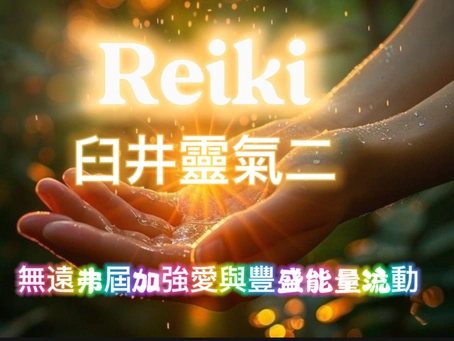
| Level 1 | Body | Reiki history, the chakra energy system, two attunements, aura scanning, and full-body hand positions for yourself and others | 11:00–17:00 | HK$900 |
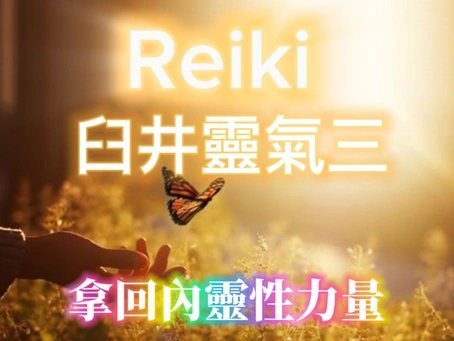
| Level 2 | Mind | The power, emotional and distance symbols; distance Reiki, space clearing and the microcosmic orbit | 11:00–17:00 | HK$1,380 |
| Advanced Level | Spirituality | The Master symbol and designated symbols; the twelve meridians and the meridian clock; pyramid energy boundaries; Reiki family constellations and I Ching philosophy | 11:00–17:30 | HK$1,880 |
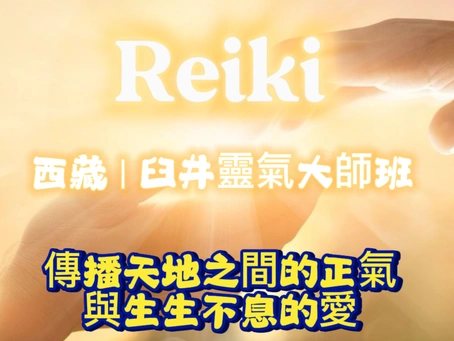
| Master Level | Teacher training | Higher-consciousness chakras; Usui/Tibetan Master symbols and mantras; attuning others; Reiki healing attunement; and professional ethics for Reiki practitioners | Four days plus one follow-up day | HK$8,888 |
For a fuller comparison, read Choosing Reiki Courses in Hong Kong: Four Levels, Fees and Content 、 A Day at a Reiki Level 1 Certificate Workshop and Where to Learn Reiki in Hong Kong: Seven Factors to Consider . If you are considering Reiki as a career, see the Career Guide for Holistic Wellbeing Practitioners 。
Attunement is a key distinction between Usui Reiki and other relaxation practices. It is a one-to-one transmission ritual between teacher and student, traditionally intended to open the student’s Reiki energy channels. Level 1 includes two attunements, followed by hands-on practice as a central part of the course. For students’ accounts of how it feels, read What Does Reiki Attunement Feel Like? Students Share Their Experiences 。
Reiki Healing Session
Reiki healing is a one-to-one energy session offered by a practitioner to support deep relaxation of body and mind. You can book a session without enrolling in a course.
We encourage a balanced understanding of Reiki. The US National Center for Complementary and Integrative Health (NCCIH), part of the National Institutes of Health, notes that Reiki has been studied for pain, anxiety and depression, but most studies have been of low quality and their findings inconsistent. It has therefore not been clearly shown to be effective for any health-related purpose; studies have also not identified harmful effects. Reiki may be approached as a complementary practice for relaxation and self-care, rather than a substitute for medical care. For a detailed discussion, see Does Reiki Work? What Research Says About Stress and Sleep 。
For common applications, fees and the booking process, read Reiki for Sleep, Anxiety and Emotions: Common Applications Explained and Reiki Healing in Hong Kong: Fees, Sessions and Booking . Reiki can also be offered gently to children, pets and plants at home. Read more in Reiki for Babies, Pets and Plants 。
I Ching × Reiki
The I Ching, often described as the foremost of the Chinese classics, explores the world through the changing interplay of yin and yang. Reiki focuses on the flow and balance of energy. Their shared interest in balance is a distinctive part of Soul Love Center’s teaching.
At Soul Love Center, the I Ching is used as a framework for self-awareness rather than fortune-telling. Yin and yang offer a way to consider movement and stillness, tension and relaxation; the generating and controlling cycles of the Five Elements help explore mutual support and balance between energies. The advanced course also includes Reiki family constellations through I Ching philosophy, together with the twelve meridians and the meridian clock, inviting students to explore their relationships with family, the body and time from several perspectives.
Mind · Body · Spirit
Holistic wellbeing encompasses the body, the mind — including emotions and thoughts — and the spirit. Soul Love Center’s Usui Reiki courses follow these three dimensions, supporting a gradual journey from the outer to the inner self.
| Dimension | Focus | Related course |
|---|---|---|
| Body | Explore the effects of energy on the body, clear heavy energy and learn ways to find balance | Usui Reiki Level 1 |
| Mind | Explore thoughts as frequency and energy, move beyond limiting beliefs and transform established patterns | Usui Reiki Level 2 |
| Spirit | Develop self-awareness and intuition, and explore purpose and direction in life | Advanced Usui Reiki |
| Daily practice | Meditation, breathing and awareness: bringing insight practice into everyday life | Beginner and Advanced Meditation and Insight Workshops |
Alongside Reiki, meditation and insight practice are important foundations for integrating body, mind and spirit. The Beginner Meditation and Insight Workshop gently introduces meditation, breathing and awareness; Meditation and Insight Workshop — Advanced takes the practice further. To understand the differences between meditation, seated practice and Reiki, read Meditation, Seated Practice and Reiki: A Beginner’s Guide 。
Long working hours, pressure and information overload can leave us caring for the body while overlooking the mind and spirit. Holistic integration is not about escaping reality, but learning to notice ourselves, care for our emotions and regain inner steadiness. For an introduction, read What Is Mind–Body–Spirit Integration? Self-Care for Hong Kong City Life 。
Your Teacher
Cathy Wong experienced difficult periods in her life and explored hypnotherapy, family constellations and various Western holistic courses before finding direction in Reiki, the I Ching and Buddhist wisdom. Through Soul Love Center, she hopes to share ways of cultivating wellbeing and wisdom, and to be a supportive teacher and companion on her students’ journeys.
To learn more, visit Our Teacher 、 Cathy Wong: The Healing Journey of an IARP-Registered Reiki Master and About Us . Cathy also explains, in our Videos the meaning of the Reiki symbols Dai Ko Myo and Sei Hei Ki, and how Reiki is used in healing practice.
Over the years, students have described changes in their emotions, relationships, family lives and approaches to work through Reiki practice. Experiences and feelings differ from person to person; the following accounts represent individual experiences only: Student Testimonials 、 Real Stories: How Usui Reiki Students Experienced Abundance and Change 、 Reiki and Abundance: Real-Life Experiences 。
Journal · Knowledge Hub
Explore selected articles on Reiki basics, healing, the I Ching and holistic wellbeing. For the full list, visit The Reiki and Holistic Wellbeing Article Library 。
FAQ
Reiki is the romanisation of the Japanese word for the practice of transmitting energy through the hands. Usui Reiki specifically refers to the system taught by Mikao Usui through the society he founded in Tokyo in 1922. It is the origin of most Reiki lineages practised worldwide today.
Yes. Usui Reiki Level 1 Certificate Workshop is designed for beginners, with no religious background or special talent required. It covers Reiki history and the chakra energy system, with two attunements and hand-position practice. The fee is HK$900 and the course runs from 11:00 to 17:00.
There are four Usui Reiki levels: Level 1 at HK$900, Level 2 at HK$1,380, Advanced at HK$1,880, and Usui/Tibetan Reiki Master at HK$8,888 (four days plus one follow-up day). Beginner and advanced meditation and insight workshops are also offered at HK$480 and HK$680 respectively.
No. Reiki is a complementary approach to relaxation and self-care, and cannot replace professional medical diagnosis or treatment. The US NCCIH notes that Reiki has not been clearly shown to be effective for any health-related purpose, although harmful effects have not been identified. If you have a health concern, consult a registered medical practitioner first.
The I Ching explores dynamic balance through yin and yang, the Eight Trigrams and the 64 Hexagrams, while Reiki focuses on energy flow and balance. Soul Love Center brings them together as a framework for self-awareness. The advanced course also includes Reiki family constellations through I Ching philosophy, the twelve meridians and the meridian clock.
The Usui/Tibetan Reiki Master course is open only to students who have completed Advanced Usui Reiki. On completion, the centre awards the relevant certificates and an IARP-recognised Usui/Tibetan Reiki Master certificate.
Yes. If you would simply like to receive Reiki, contact us on WhatsApp 9121 4927 to ask about appointments, the session process and fees.
Ask about upcoming dates through WhatsApp 9121 4927, email Soullovecentre@hotmail.com or the website’s contact form . The centre will help confirm the appropriate level and schedule for you.
For more questions, see Frequently asked questions page.
News
Important notice: information on this website about Reiki, the I Ching and holistic wellbeing concerns complementary approaches to relaxation, self-awareness and self-care. It is not medical advice and cannot replace diagnosis or treatment by a registered medical practitioner. Student accounts are personal experiences, and results vary. If you have a health concern, consult a registered medical practitioner first.
Reiki invites you to reconnect with your own strength. Whether you would like to take a Usui Reiki course, book a healing session or explore the I Ching and holistic integration, you are welcome to contact us. Cathy will reply personally and suggest a suitable starting point.
